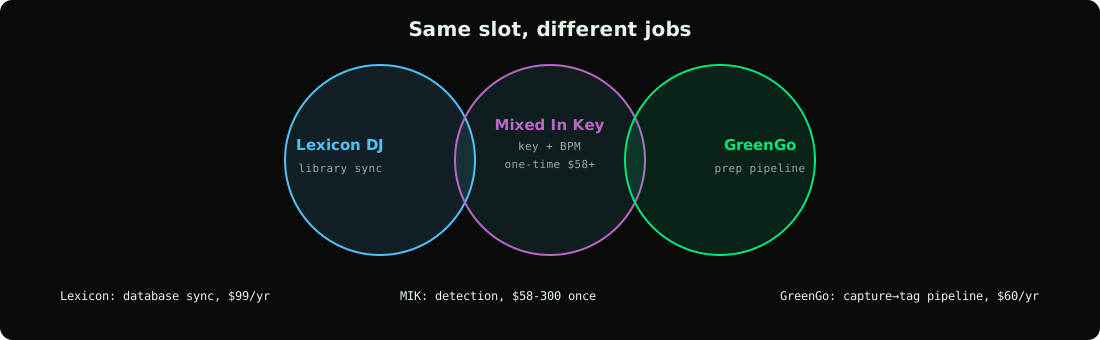
Lexicon DJ, Mixed In Key, and GreenGo get compared constantly — partly because all three sit in the "prepare your DJ library" slot, but they actually do quite different jobs. Lexicon is a library manager, Mixed In Key is a dedicated analyzer, and GreenGo is a browser-based prep pipeline. Here's the honest three-way comparison: what each does, what it costs, and which one fits which DJ.
Three Tools, Three Different Jobs
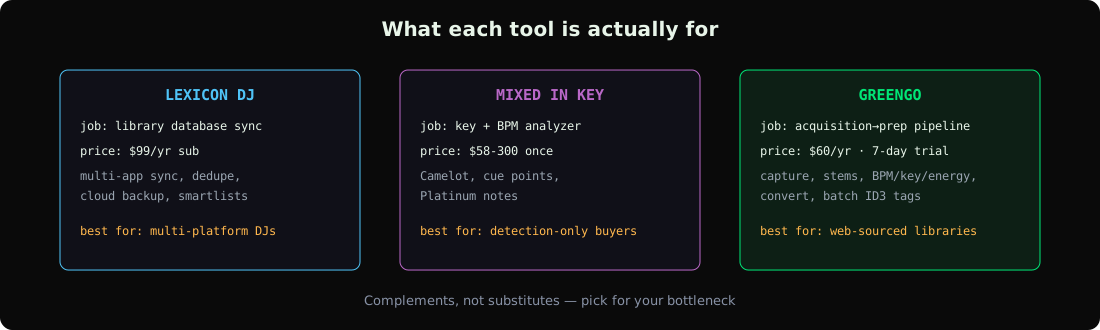
Lexicon DJ is a DJ library database manager. Its job is keeping your Rekordbox, Serato, Traktor, Engine DJ, and VirtualDJ libraries synchronized — smart playlists, deduplication, batch edits, cloud backup of your DJ database. Analysis is bundled, but it's a means to an end: library hygiene across apps.
Mixed In Key is a dedicated analyzer: BPM, key (Camelot notation — which it invented), energy levels, cue points. One job, done well, one-time purchase. It doesn't manage libraries and doesn't try to.
GreenGo is a desktop browser with a built-in audio pipeline: capture tracks from supported cloud pages while you browse, split stems with Demucs, detect BPM/key/energy/mood, convert formats, batch-write ID3 tags. It covers the acquisition-to-ready-to-mix chain end to end.
Feature-by-Feature Comparison
| Capability | Lexicon DJ | Mixed In Key | GreenGo |
|---|---|---|---|
| BPM detection | Yes | Yes | Yes — multi-method consensus, 70-200 range |
| Key detection | Yes | Yes — reference-grade | Yes — 4-signal fusion, Camelot + Open Key |
| Energy / mood | Limited | Energy (paid tiers) | Yes — energy 1-10, 9-class mood, danceability |
| ID3 batch tagging | Yes | Partial | Yes — writes TBPM/TKEY/artist/title |
| Library sync across DJ apps | Best-in-class | No | No — writes portable tags instead |
| Stem separation | No | No | Yes — 6-stem Demucs |
| Web audio capture | No | No | Yes — built into the browser |
| Format conversion | No | No | Yes — MP3/WAV/FLAC/M4A/OGG/AAC |
| Platforms | Windows, macOS | Windows, macOS | Windows 10/11, macOS 12+ |
Pricing Breakdown
- Lexicon DJ: ~$15/month or ~$99/year subscription. The most expensive option, aimed at DJs managing large multi-app libraries.
- Mixed In Key: ~$58 one-time for the base license; energy/cue features and Studio bundles push it toward $149-300.
- GreenGo: $5.99/month, $15.99 for 3 months, or $60/year. 7-day free trial, no credit card required, 3 free stem separations included.
Over two years: Lexicon ≈ $198, Mixed In Key ≈ $58-300 one-time, GreenGo ≈ $120-144. Mixed In Key wins on pure cost; GreenGo wins on capability per dollar; Lexicon is priced for the unique thing it does.
Which Fits Your Workflow?
Pick Lexicon DJ if: you run multiple DJ platforms and your recurring pain is keeping them in sync — crates in Serato that should exist in Rekordbox — our library organization guide covers the manual version, deduped libraries, cloud backups. Nothing else does this well.
Pick Mixed In Key if: you want a one-time purchase purely for detection and you trust its mature algorithms — especially if you use its cue-point ecosystem.
Pick GreenGo if: your bottleneck is the whole prep pipeline — getting tracks from the web, separating stems, detecting BPM/key/energy, converting and tagging — rather than any single step. It pairs naturally with Rekordbox or Serato because it writes standard tags; see the batch tagging guide for how that flows into DJ software. Detection quality itself is covered in the accuracy comparison and the GreenGo vs Mixed In Key head-to-head.
The Verdict
They're less competitors than complements:
- Lexicon DJ = library manager. Syncs your apps.
- Mixed In Key = analyzer. One job, one-time cost.
- GreenGo = acquisition + prep pipeline. Browse, capture, analyze, tag, convert, split stems.
A power user's stack could legitimately be Lexicon for database sync plus GreenGo for acquisition and tagging — they'd complement rather than conflict. If you can only pick one: DJs building libraries from web sources get the most from GreenGo; DJs maintaining existing multi-app libraries get the most from Lexicon; DJs who only need keys get the most value from Mixed In Key's one-time price.
For deeper single-comparison dives: GreenGo vs Mixed In Key, Mixed In Key alternatives, and the DJ software feature matrix.
Frequently Asked Questions
Which of the three - Lexicon DJ, Mixed In Key, or GreenGo - should I pick?
Pick GreenGo if you want one subscription ($5.99/month, 7-day free trial, no credit card) that downloads, converts, analyzes, tags, and stem-separates your tracks. Pick Mixed In Key if you already own a clean library and only need best-in-class key/BPM analysis as a one-time $58 purchase. Pick Lexicon DJ if your priority is cross-platform library syncing across Rekordbox, Serato, and Traktor rather than analysis or acquisition. Most DJs starting a library from scratch in 2026 get the most value from GreenGo's all-in-one pipeline.
Is Lexicon DJ better than Mixed In Key?
They do different jobs. Lexicon DJ is a library manager that syncs Rekordbox, Serato, Traktor and other databases; Mixed In Key is a dedicated BPM/key analyzer. If you need library sync, Lexicon wins by default. If you only need detection, Mixed In Key is cheaper.
Does Lexicon DJ detect BPM and key?
Yes — Lexicon includes BPM and key analysis, but detection is a supporting feature. Its core strength is syncing and managing DJ libraries across apps, not analysis depth.
What's the cheapest alternative to Lexicon DJ?
GreenGo at $5.99/month covers detection, tagging, stems, capture and conversion — but not database sync, which is Lexicon's unique feature. If sync isn't needed, GreenGo is the cheaper tool; if it is, Lexicon has no real cheap equivalent.
Can GreenGo sync my Rekordbox and Serato libraries?
No — GreenGo doesn't manage DJ app databases. Instead it writes standard ID3 tags into the audio files, so both Rekordbox and Serato read the same BPM, key, artist and title on import. For database-level sync, Lexicon DJ is the specialist tool.
Is Mixed In Key still worth buying in 2026?
Yes if you want a one-time purchase for mature key detection and use its cue-point features. If you need stems, capture, conversion or energy/mood detection, subscription tools cover more for less.
Three different jobs — pick for the bottleneck you actually have. If it's the acquisition-to-analysis chain, GreenGo's 7-day trial costs you nothing to test.
Ihor, Music software developer at GreenGo.