What Is the Camelot Wheel?
The Camelot wheel is a harmonic mixing system that assigns a code to every musical key. Each key gets a number (1 to 12) and a letter: A for minor keys, B for major keys. The system was popularized by Mixed In Key and is now used by Rekordbox, Serato, Traktor, VirtualDJ, and GreenGo.
The wheel arranges keys so that harmonically compatible keys are adjacent. This lets DJs mix in key without needing to know music theory — you just match codes.
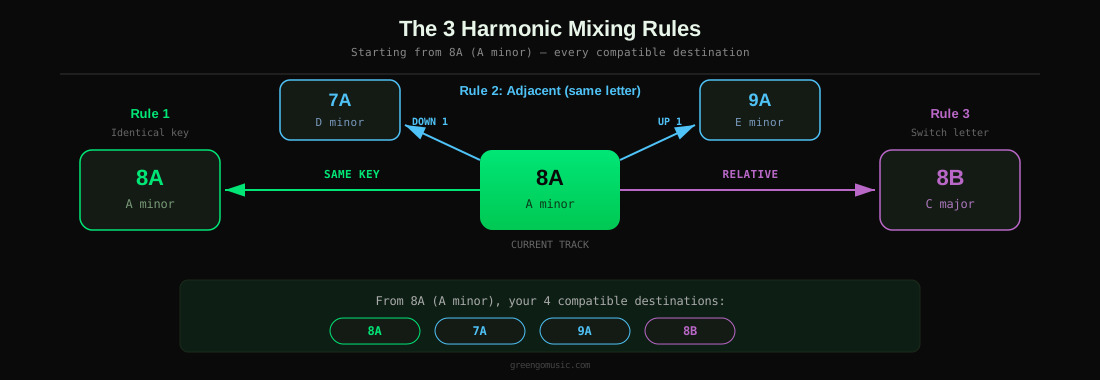
For example, 8A (A minor) is compatible with 7A (D minor), 9A (E minor), 8B (C major), and 8A itself. If your current track is 8A, your next track should be one of those four codes.
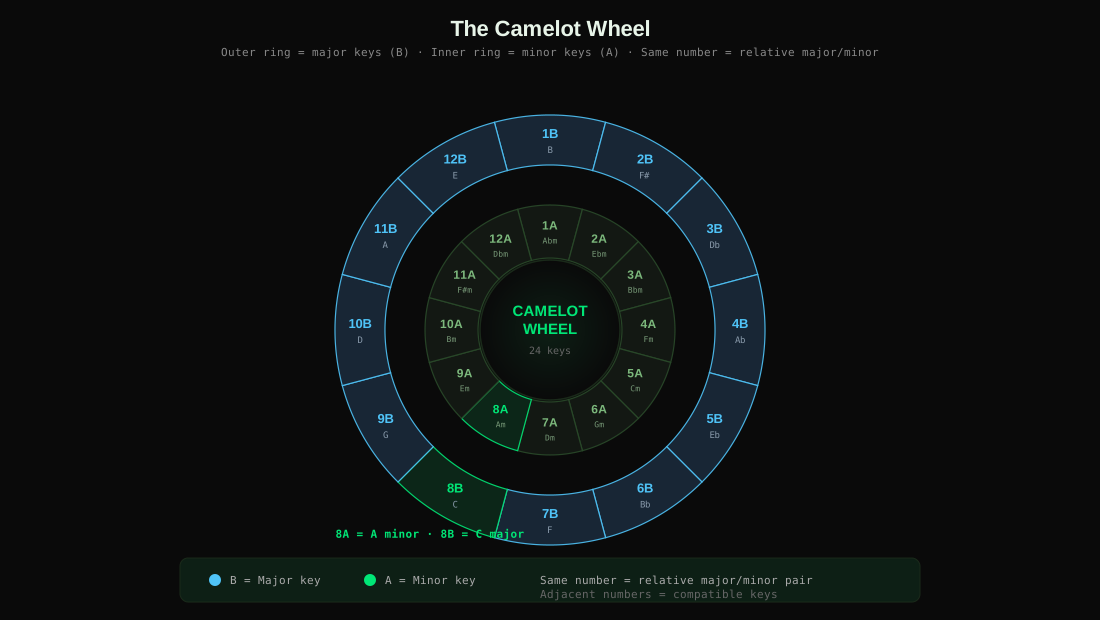
The Complete Camelot Wheel Table
Here is every key on the Camelot wheel, with its musical key name, Open Key notation, mode, and compatible keys for harmonic mixing.
| Camelot | Musical Key | Open Key | Mode | Compatible Keys | Relative Key |
|---|---|---|---|---|---|
| 1A | Ab minor (G# minor) | 6m | Minor | 12A, 2A, 1B | 1B (B major) |
| 1B | B major | 6d | Major | 12B, 2B, 1A | 1A (Ab minor) |
| 2A | Eb minor (D# minor) | 7m | Minor | 1A, 3A, 2B | 2B (F# major) |
| 2B | F# major (Gb major) | 7d | Major | 1B, 3B, 2A | 2A (Eb minor) |
| 3A | Bb minor (A# minor) | 8m | Minor | 2A, 4A, 3B | 3B (Db major) |
| 3B | Db major (C# major) | 8d | Major | 2B, 4B, 3A | 3A (Bb minor) |
| 4A | F minor | 9m | Minor | 3A, 5A, 4B | 4B (Ab major) |
| 4B | Ab major | 9d | Major | 3B, 5B, 4A | 4A (F minor) |
| 5A | C minor | 10m | Minor | 4A, 6A, 5B | 5B (Eb major) |
| 5B | Eb major | 10d | Major | 4B, 6B, 5A | 5A (C minor) |
| 6A | G minor | 11m | Minor | 5A, 7A, 6B | 6B (Bb major) |
| 6B | Bb major | 11d | Major | 5B, 7B, 6A | 6A (G minor) |
| 7A | D minor | 12m | Minor | 6A, 8A, 7B | 7B (F major) |
| 7B | F major | 12d | Major | 6B, 8B, 7A | 7A (D minor) |
| 8A | A minor | 1m | Minor | 7A, 9A, 8B | 8B (C major) |
| 8B | C major | 1d | Major | 7B, 9B, 8A | 8A (A minor) |
| 9A | E minor | 2m | Minor | 8A, 10A, 9B | 9B (G major) |
| 9B | G major | 2d | Major | 8B, 10B, 9A | 9A (E minor) |
| 10A | B minor | 3m | Minor | 9A, 11A, 10B | 10B (D major) |
| 10B | D major | 3d | Major | 9B, 11B, 10A | 10A (B minor) |
| 11A | F# minor (Gb minor) | 4m | Minor | 10A, 12A, 11B | 11B (A major) |
| 11B | A major | 4d | Major | 10B, 12B, 11A | 11A (F# minor) |
| 12A | Db minor (C# minor) | 5m | Minor | 11A, 1A, 12B | 12B (E major) |
| 12B | E major | 5d | Major | 11B, 1B, 12A | 12A (Db minor) |
The 3 Harmonic Mixing Rules
The Camelot wheel follows three simple rules for harmonic mixing. If you stay within these rules, your transitions will sound musically coherent.
Rule 1: Same Key
Mixing two tracks in the same Camelot code always works. If your current track is 8A, your next track can also be 8A. This is the safest transition — the keys are identical, so there is no harmonic clash.
Example: 8A to 8A (A minor to A minor)
Rule 2: Adjacent on the Same Letter
Moving one step up or down on the same letter (A or B) creates a smooth modulation. The keys share most of the same notes, so the transition sounds natural.
Examples:
- 8A to 9A (A minor to E minor) — move up one
- 8A to 7A (A minor to D minor) — move down one
- 8B to 9B (C major to G major) — move up one
- 8B to 7B (C major to F major) — move down one
Wrapping: The wheel is circular. After 12A comes 1A, and after 1A comes 12A. So 1A to 12A is a valid one-step-down transition.
Rule 3: Relative Major/Minor (Switch Letter)
Switching between A and B on the same number gives you the relative major or minor key. These keys share the same key signature and notes, just with a different tonal center.
Examples:
- 8A to 8B (A minor to C major) — relative major
- 8B to 8A (C major to A minor) — relative minor
- 5A to 5B (C minor to Eb major) — relative major
Key Compatibility Matrix
Here is a quick-reference matrix showing which keys mix well together. Each row shows the current key and all compatible next keys.
| Current | Same | Up 1 | Down 1 | Relative |
|---|---|---|---|---|
| 1A | 1A | 2A | 12A | 1B |
| 1B | 1B | 2B | 12B | 1A |
| 2A | 2A | 3A | 1A | 2B |
| 2B | 2B | 3B | 1B | 2A |
| 3A | 3A | 4A | 2A | 3B |
| 3B | 3B | 4B | 2B | 3A |
| 4A | 4A | 5A | 3A | 4B |
| 4B | 4B | 5B | 3B | 4A |
| 5A | 5A | 6A | 4A | 5B |
| 5B | 5B | 6B | 4B | 5A |
| 6A | 6A | 7A | 5A | 6B |
| 6B | 6B | 7B | 5B | 6A |
| 7A | 7A | 8A | 6A | 7B |
| 7B | 7B | 8B | 6B | 7A |
| 8A | 8A | 9A | 7A | 8B |
| 8B | 8B | 9B | 7B | 8A |
| 9A | 9A | 10A | 8A | 9B |
| 9B | 9B | 10B | 8B | 9A |
| 10A | 10A | 11A | 9A | 10B |
| 10B | 10B | 11B | 9B | 10A |
| 11A | 11A | 12A | 10A | 11B |
| 11B | 11B | 12B | 10B | 11A |
| 12A | 12A | 1A | 11A | 12B |
| 12B | 12B | 1B | 11B | 12A |
Camelot vs Open Key Notation
There are two main notation systems for DJ harmonic mixing. Both represent the same keys — they just use different labels.
| Feature | Camelot | Open Key |
|---|---|---|
| Format | Number + Letter (8A, 8B) | Number + m/d (1m, 1d) |
| Minor keys | A suffix (8A = A minor) | m suffix (1m = A minor) |
| Major keys | B suffix (8B = C major) | d suffix (1d = C major) |
| Numbering | Starts at Ab minor (1A) | Starts at A minor (1m) |
| Used by | Mixed In Key, Rekordbox, Serato, GreenGo | Traktor, VirtualDJ, GreenGo |
| Popularity | More common in modern DJ software | Common in Traktor and older tools |
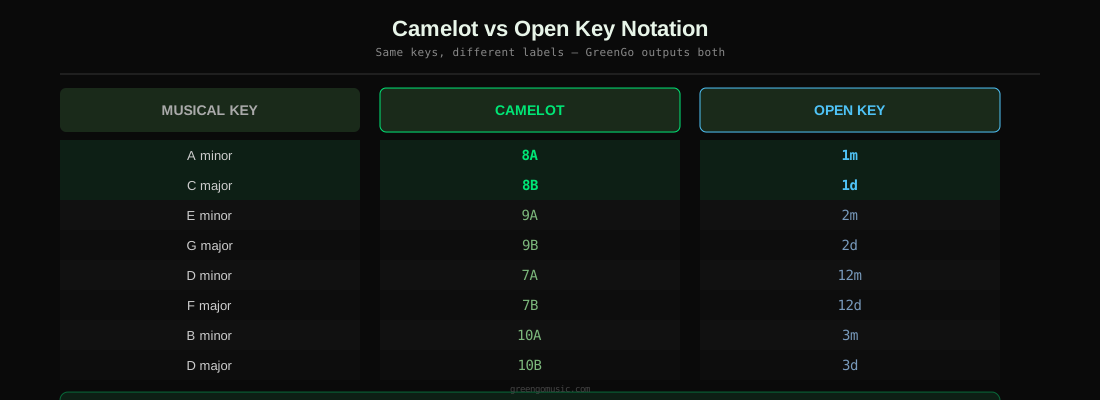
GreenGo outputs both Camelot and Open Key notation, so you can use whichever system your DJ software prefers. See our song key finder guide for how key detection works in practice.
Common DJ Key Transitions
Here are the most common harmonic transitions used by professional DJs, with examples:
| Transition | Example | Effect |
|---|---|---|
| Same key | 8A to 8A | Seamless, no key change. Safest transition. |
| Energy boost (+1) | 8A to 9A | Lifts the energy. Common in house and techno. |
| Energy drop (-1) | 8A to 7A | Brings energy down. Used for set pacing. |
| Major to relative minor | 8B to 8A | Shifts from bright to dark. Common in EDM drops. |
| Minor to relative major | 8A to 8B | Shifts from dark to bright. Uplifting effect. |
| Two-step jump | 8A to 10A | Not strictly harmonic, but works for dramatic shifts. Use sparingly. |
BPM and Key: How They Interact
Harmonic mixing is not just about key — BPM matters too. When you mix two tracks, the tempo difference affects how the key change is perceived:
- Within 3% BPM difference: Key compatibility rules apply strictly. A one-step key change (8A to 9A) will sound smooth.
- 3 to 6% BPM difference: Key lock becomes important. Without key lock, the pitch shift will alter the key and may break harmonic compatibility. See our key lock guide for details.
- Above 6% BPM difference: The tracks are in different tempo ranges. Harmonic mixing is less relevant — focus on rhythm and energy matching instead.
For BPM reference by genre, see our BPM chart for every genre. For which keys are most common in each genre, see our musical key by genre reference.
How to Use This Table
1. Detect the key of your tracks using a tool like GreenGo, Mixed In Key, or Rekordbox. The tool will assign a Camelot code to each track.
2. Sort your playlist by Camelot code. Most DJ software lets you sort by key column.
3. Plan transitions using the compatibility matrix. If your current track is 8A, your next track should be 8A, 7A, 9A, or 8B.
4. Use key lock when adjusting tempo to prevent pitch drift from changing the key. See our key lock guide.
5. Tag your tracks with the Camelot code in the ID3 metadata so your DJ software can read it. GreenGo writes Camelot codes to ID3 tag fields automatically. See our DJ library organization guide for the full workflow.
For a complete DJ set preparation workflow, see our track preparation guide and open-format DJ set prep guide.
Frequently Asked Questions
What is 8A on the Camelot wheel?
8A is A minor. Its compatible keys are 8A (same), 7A (D minor, down one), 9A (E minor, up one), and 8B (C major, relative major). 8A is one of the most common keys in electronic music, particularly house and techno.
What is 8B on the Camelot wheel?
8B is C major. Its compatible keys are 8B (same), 7B (F major, down one), 9B (G major, up one), and 8A (A minor, relative minor). C major is the most common major key in popular music.
How do I know which keys are compatible on the Camelot wheel?
A key is compatible with four keys: itself, the key one number up (same letter), the key one number down (same letter), and the key with the opposite letter (same number). For example, 5A is compatible with 5A, 6A, 4A, and 5B. The wheel wraps around, so 1A and 12A are adjacent.
What is the difference between Camelot and Open Key notation?
Camelot uses numbers 1-12 with A (minor) and B (major) suffixes. Open Key uses numbers 1-12 with m (minor) and d (major) suffixes, but the numbering starts at a different key. 8A (Camelot) equals 1m (Open Key) — both represent A minor. GreenGo outputs both notations.
Can I mix tracks that are not harmonically compatible?
Yes, but the transition may sound dissonant. Many DJs break the rules intentionally for dramatic effect, especially during drops or genre changes. If you do this, use EQ mixing, quick cuts, or effects to mask the key clash. Harmonic mixing is a guideline, not a law.
Does key detection accuracy matter for harmonic mixing?
Yes. If your key detection tool assigns the wrong Camelot code, your planned transitions will clash. GreenGo uses multi-algorithm fusion (librosa + libKeyFinder + others) for higher accuracy than single-algorithm tools. See our BPM and key detection accuracy comparison for benchmarks.